4 min read
Healthy Food Franchise: Costs, Support, and 12 Opening Steps
Explore healthy food franchise ownership with Pure Green. Review investment, training, menu options, and 12 practical steps for opening your location.
In this article
A healthy food franchise gives you a defined menu, brand standards, and operating systems to evaluate before you open. The right choice depends on your capital, your target market, and your willingness to run a food business with a team.
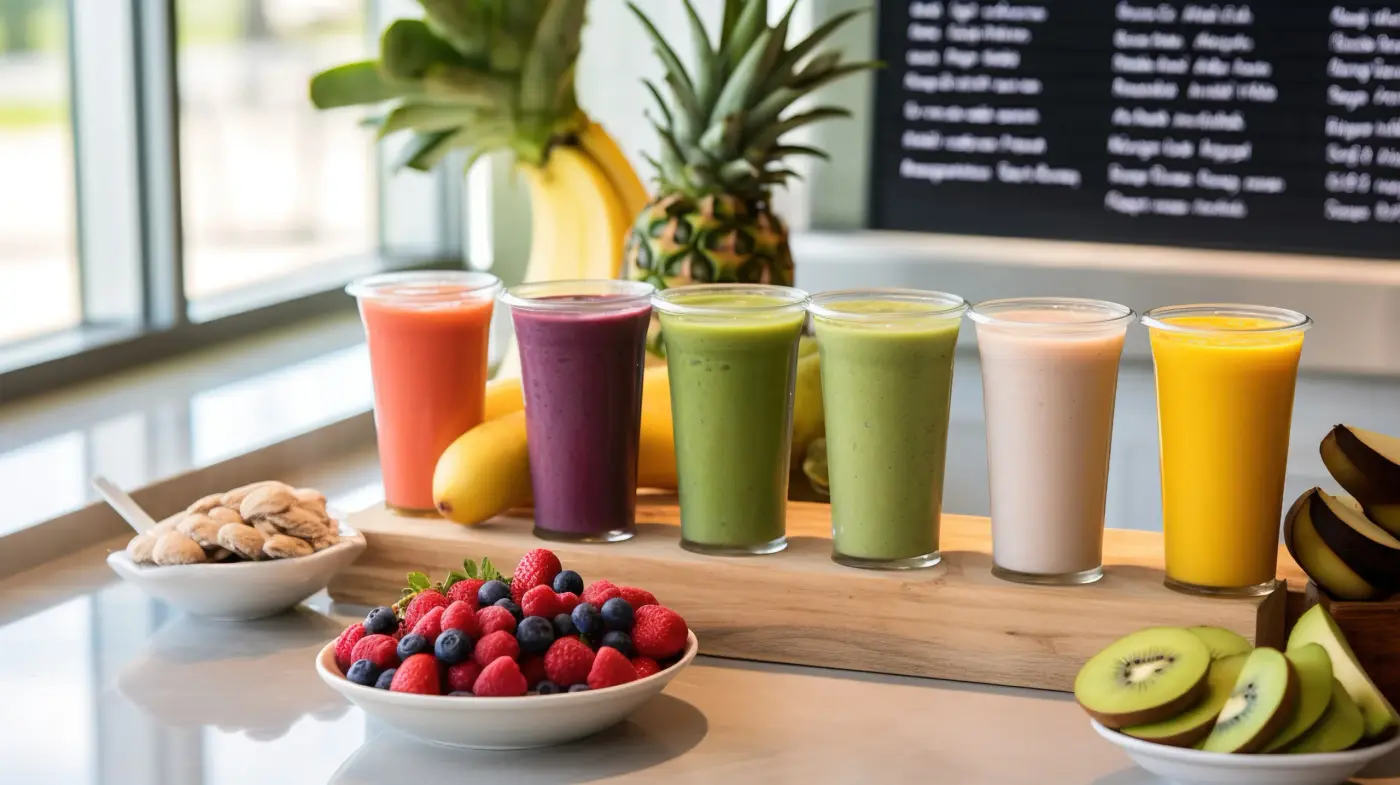
Pure Green combines superfood smoothies, acai and pitaya bowls, cold-pressed juice, shots, and other menu options. Start by understanding the investment and the operating model; then use the opening checklist below to plan the work ahead.
Healthy food franchise investment: what to budget for
| What to budget for | Published requirement |
|---|---|
| Estimated total initial investment | $177,450–$493,900 |
| Initial franchise fee | $40,000 |
| Liquid capital qualification | $100,000 |
| Net worth qualification | $300,000 |
| Royalty | 6% of gross revenue |
| National marketing fee | 2% of gross revenue |
The liquid-capital qualification is not the total cost of opening. Your build-out, lease, equipment, opening inventory, and working capital affect the amount you need. Review the startup-cost breakdown and the current Franchise Disclosure Document (FDD) with the development team before making an investment decision.
Discuss your market with Pure Green
Is Pure Green the right healthy food franchise for you?
Review the menu and visit an existing store to see preparation, ordering, and service in practice. A bowl-and-beverage concept has different equipment, storage, and preparation needs from a full-service restaurant. Compare the actual layout and approved equipment rather than assuming every healthy-food business has the same costs.
Pure Green recommends a footprint of 500–1,500 sq ft. Its support includes site-selection assistance, store-design guidance, equipment specifications, training, and ongoing operations and marketing assistance. Owners remain responsible for hiring, service standards, costs, and local execution. Learn more about franchise owner support before deciding whether the role matches your experience and goals.
Read Charles McClendon III’s Arcadia owner story for an existing owner’s perspective. Then prepare questions for franchisees about staffing, opening challenges, and the help they receive.
12 steps to opening a healthy food franchise location
1. Understand the franchise model
Review the FDD, agreement, initial investment, recurring fees, and responsibilities. Understand which decisions follow the franchise system and which remain your responsibility as the local operator.
2. Choose a compatible franchisor
Evaluate the menu, customer experience, support, and ownership expectations. Compare them with the kind of business you want to manage. Speak with current and former franchisees rather than relying only on recruiting materials.
3. Organize your finances
Separate your liquid capital from the total project budget. Include build-out, equipment, deposits, opening costs, and working capital. Review assumptions with your own advisers and discuss financing without treating approval as assured.
4. Evaluate the market and location
Study traffic, access, visibility, neighboring businesses, competing concepts, and occupancy costs. Work with the franchise team on site review before committing to a lease.
5. Build your support network
Identify the development and operations contacts you will work with. Establish relationships with your accountant, contractor, property representative, and other local advisers. Ask which decisions require franchisor approval.
6. Use franchise-specific information
Use the current FDD and information supplied for your proposed store format. Distinguish gross sales from owner income. A different store’s results do not establish what your location will achieve.
7. Recruit and train your team
Plan for hiring, onboarding, management coverage, and scheduling. Train the team on recipes, food safety, allergens, customer service, and opening and closing procedures.
8. Prepare your supply chain
Confirm approved products, ordering procedures, lead times, storage needs, and inventory controls. For Pure Green, understand the wholesale program for bottled cold-pressed juice and shots alongside the ingredients used for made-to-order products.
9. Prepare for your grand opening
Coordinate inspections, equipment setup, training, and the opening plan. Introduce the business to nearby employers, residents, and community organizations. Follow the brand’s marketing and operational requirements.
10. Monitor useful operating measures
Track sales, transactions, average order value, labor costs, product costs, waste, and guest feedback. Read the measures together: more sales do not automatically mean greater profit.
11. Stabilize the first location
Develop consistent management and service before considering another store. Review your finances, team capacity, and local execution with the franchise team when discussing future growth.
12. Improve within the franchise system
Use guest feedback and operating data to improve staffing, service, inventory, and community outreach. Obtain required approvals for changes to products, branding, or operating procedures.
Start with your market and qualifications
Compare food franchise opportunities or explore the acai bowl franchise model for more detail. When you are ready, the Pure Green team can discuss your preferred market, financial qualifications, and next steps.
Own a Pure Green
Learn about owning a Pure Green franchise
Tell us where you'd like to open and our franchise team will follow up with territory availability and next steps.
- Total investment $177,450–$493,900
- Liquid capital from $100,000, net worth from $300,000
- 500–1,500 sq ft footprint