Franchise 12 min read
How to Start a Smoothie Business in 2027
How to start a smoothie business: pick a format, choose independent or franchise, budget startup costs, set up equipment, price your menu and open your shop.
In this article
- The Short Answer
- Is a Smoothie Business a Good Idea?
- 1. Choose Your Smoothie Business Format
- 2. Decide: Independent Smoothie Shop or Smoothie Franchise
- 3. Budget Your Smoothie Shop Startup Costs
- 4. Find a Location With Daily Traffic
- 5. Set Up Your Smoothie Shop Equipment
- 6. Build Your Menu and Price Every Smoothie
- 7. Get Your Permits and Licenses
- 8. Hire, Train and Open
- Is a Smoothie Business Profitable?
- Starting a Smoothie Business With Pure Green
- Frequently Asked Questions
The Short Answer
How do you start a smoothie business? Choose a format (storefront, kiosk, cart or a shop inside a gym), decide whether to build your own brand or buy a smoothie franchise, price out your startup costs, find a location with steady daily traffic, set up blending and freezer equipment, build a menu you can price profitably, get your permits, and train your team before opening day.
The biggest decision is the second one. Going independent gives you full control and no royalties. A franchise gives you a tested menu, suppliers and training in exchange for fees. The rest of this guide walks through both paths so you can compare them side by side.
The Steps at a Glance
| Step | What you decide |
|---|---|
| 1. Format | Storefront, kiosk, cart, or shop-in-shop |
| 2. Independent or franchise | Build your own brand or license a proven one |
| 3. Budget | Startup costs and the cash you keep in reserve |
| 4. Location | Where your daily customers already are |
| 5. Equipment | Blenders, freezer space and refrigeration |
| 6. Menu and pricing | What you sell and what each cup costs to make |
| 7. Permits | Health department approval and licenses |
| 8. Team and opening | Hiring, training and launch |
Is a Smoothie Business a Good Idea?
Smoothies are a daily habit for many customers: a breakfast on the way to work, a post-workout meal, a lunch that feels lighter than fast food. That routine is the appeal of the business. A smoothie shop earns most of its money from regulars who come back several times a week, not from one-time visitors.
The model also has a few built-in advantages:
- Simple preparation. A smoothie is a recipe and a blender. There is no fryer, grill or hood system in a typical smoothie shop, which keeps the kitchen small.
- Small footprint. Many smoothie shops run in a compact storefront or kiosk.
- Several ways to sell. Walk-in, online ordering, delivery apps and catering can all come from the same counter.
The challenges are real too. Fresh and frozen produce prices move with the season, competition from national chains is strong in many markets, and a shop with too little traffic will struggle no matter how good the smoothies are. The steps below are designed to test those risks before you commit money.
1. Choose Your Smoothie Business Format
Your format decides your rent, your staff size and which locations will work.
- Smoothie storefront: the classic smoothie shop, often with a few seats. The most visible format, and the most expensive to build.
- Smoothie and juice bar: smoothies plus juice, acai bowls and shots. A broader menu brings customers in at more times of the day.
- Kiosk: a counter in a mall, airport or office building. Lower rent, but limited space for storage and prep.
- Shop-in-shop: a smoothie counter inside a gym, studio or grocery store. A built-in audience, but you depend on the host’s hours and traffic.
- Cart, stand or truck: farmers markets, events and festivals. The cheapest way to test demand, though weather and permits limit your selling days.
Many owners who start with a cart or market stand use it to prove their recipes and build a following before signing a storefront lease.
2. Decide: Independent Smoothie Shop or Smoothie Franchise
This choice shapes every step that follows.
| Independent smoothie shop | Smoothie franchise | |
|---|---|---|
| Brand, recipes and menu | You create them | Provided and tested |
| Upfront fees | None beyond your own costs | Initial franchise fee |
| Ongoing fees | None | Royalty and marketing fee |
| Suppliers | You find and negotiate them | Approved vendors in place |
| Training | You build it | Provided |
| Site selection and build-out | On your own or with consultants | Franchisor support |
| Control | Full | Within brand standards |
Go independent if you have restaurant or food-service experience, a clear concept that is not already on every corner, and the time to build recipes, suppliers, training and marketing yourself.
Choose a franchise if you would rather start with a menu customers already know, a brand that does its own marketing, and a team that has opened stores before. You give up some control and pay ongoing fees, but you skip much of the trial and error.
If you go the franchise route, compare brands carefully. Our guide on how to choose a smoothie franchise covers what to look for, and our smoothie and juice franchise cost comparison lays out published investment ranges for several brands side by side.
Whichever brand you consider, the franchisor must give you its Franchise Disclosure Document (FDD) at least 14 calendar days before you sign a binding agreement or pay any money (16 CFR 436.2). Read the fees, the estimated initial investment and any financial performance information closely, and talk to current owners.
3. Budget Your Smoothie Shop Startup Costs
How much it costs to open a smoothie shop depends mostly on the size of the space, the local rent and the amount of build-out the space needs. A cart costs a fraction of a storefront. A second-generation restaurant space with plumbing in place costs far less to build out than an empty shell.
Plan for these costs whichever path you take:
- Build-out: architect, permits, contractor, plumbing, electrical, finishes and signage. Usually the largest single cost.
- Equipment: blenders, freezers, refrigeration, ice machine, sinks and prep tables (see step 5).
- Lease costs: security deposit, first months’ rent and any rent during construction.
- Opening inventory: produce, frozen fruit, acai, protein, cups, lids and straws.
- Technology: point of sale, online ordering and a loyalty program.
- Licenses, permits and insurance.
- Grand opening marketing.
- Working capital: cash to cover payroll, rent and supplies while sales ramp up.
A franchise adds the initial franchise fee and gives you an estimated total range up front. For a Pure Green franchise, the estimated total initial investment is $177,450–$493,900, including a $40,000 franchise fee, with a 6% royalty and a 2% national marketing fee on gross revenue. See the full startup cost breakdown.
Many owners add a 10–15% buffer to their estimates. Build-outs almost always uncover something unexpected.
4. Find a Location With Daily Traffic
Smoothie shops live on repeat visits, so look for places people pass every day, not once a month.
- Morning and midday traffic: near offices, schools, hospitals and commuter routes.
- Fitness neighbors: gyms, yoga studios and boutique fitness centers bring a steady post-workout crowd.
- Visibility and access: a storefront people can see from the street, easy parking or walk-up access, and room for delivery drivers to pick up.
- Competition: count the smoothie and juice shops nearby. Some competition proves demand. Too much splits it.
- Lease terms: confirm the space is zoned for food service, and negotiate rent and tenant improvement allowances before you sign.
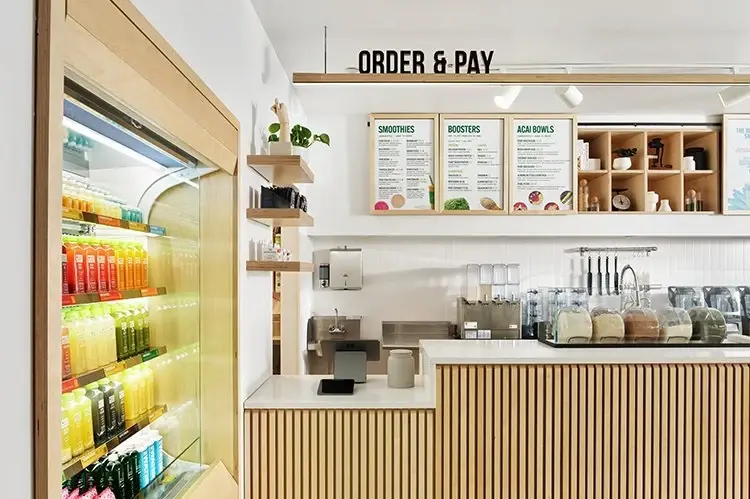
A Pure Green store typically needs 500–1,500 sq ft, which opens up spaces that are too small for a full-service restaurant.
5. Set Up Your Smoothie Shop Equipment
A smoothie shop’s kitchen is built around the blend line. Plan the layout so ingredients flow from the freezer to the blenders to the pickup counter without staff crossing paths during a rush.
Smoothie shop equipment checklist:
- Commercial blenders: several high-powered units, ideally with sound enclosures so the front counter stays quiet. Plan for at least one more blender than you think you need.
- Freezer space: frozen fruit, acai and other frozen bases take up more room than most first-time owners expect.
- Refrigeration: reach-in or under-counter units at the blend line, plus storage for fresh produce, milks and yogurt.
- Ice machine and water filtration.
- Prep and sanitation: prep tables, a produce washing sink, hand sinks and a three-compartment sink, as your health department requires.
- Smallwares and packaging: scoops, portion cups, scales, storage containers, cups, lids and straws.
- Point of sale: one system for walk-in, online and delivery orders, with a loyalty program built in.
If you plan to sell juice too, decide whether you will make it yourself or buy it bottled. Pressing juice in-house adds a cold press, more prep space and more labor. At Pure Green, an affiliated supplier delivers the bottled cold-pressed juice and shots, so owners do not manufacture juice on-site.
6. Build Your Menu and Price Every Smoothie
A focused menu is faster to make, easier to train and wastes less product than a long one. Start with a short list of signature smoothies, a few build-your-own options and add-ons such as protein, greens or superfood boosts.
Then price every item from its cost up:
- Ingredient cost: add up the cost of every scoop and portion in the cup. A common target is to keep ingredients at about 25–30% of the menu price.
- Packaging: cups, lids and straws belong in the cost of every smoothie.
- Labor and overhead: wages, rent and utilities all have to fit inside your prices.
- Waste: fresh produce spoils quickly. Track what you throw away and adjust orders each week.
Add-ons are one of the simplest ways to raise your average ticket, because a scoop of protein or a superfood boost usually costs far less than customers pay for it.
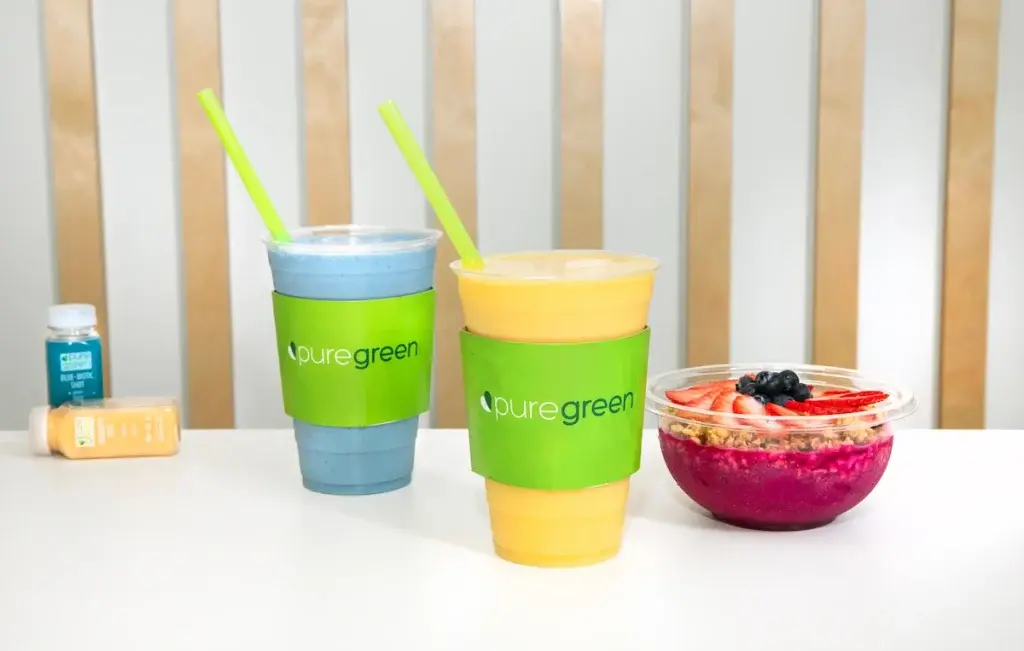
Most smoothie shops also add food that fits the same customer, such as acai bowls, smoothie bowls, toasts or bottled juice. These items draw customers at different times of day and give regulars a reason to order something new. To see how a complete menu fits together, look at the Pure Green menu.
7. Get Your Permits and Licenses
Food safety rules for smoothie shops are set and enforced locally, and they vary by state, county and city. Most local codes are based on the FDA Food Code, a model code that state and local regulators use to write their own rules (FDA).
Meet your local health department before you sign a lease. You will typically need:
- A business license and registration
- A food service or health permit, with a plan review of your layout
- A sales tax permit
- A certificate of occupancy for the space
- Food handler or food manager certification for you and your staff
Ask early about sink requirements and how frozen and fresh ingredients must be stored. Changing a layout after construction starts is expensive.
8. Hire, Train and Open
Hire before you need to and train your team on recipes, portioning, food safety, customer service and your point of sale.
- Staff for your rush hours. Smoothie shops tend to be busiest in the morning, at lunch and after work. Long waits drive away the regulars you depend on.
- Hold a soft opening for friends, family and neighbors to test recipes and timing.
- Launch locally: partner with nearby gyms and studios, run an opening promotion and give regulars a reason to come back with a loyalty program.
Is a Smoothie Business Profitable?
It can be, but profit depends on the details: rent, labor, ingredient costs, pricing, waste and above all how many regulars you build. A shop in the right location with tight cost control can do well. A shop in a quiet location rarely recovers, which is why the location step deserves the most time.
When you evaluate any opportunity, keep three numbers apart. Gross sales are revenue before expenses. Business profit is what is left after operating costs. Owner income also depends on your own salary, debt payments and taxes. A strong gross sales figure does not tell you what an owner takes home. If you are considering a franchise, read the FDD and ask current owners about their costs. The Federal Trade Commission’s franchise buying guide explains how to read this information.
Starting a Smoothie Business With Pure Green
Pure Green is a smoothie franchise and juice bar in one store. Owners serve made-to-order superfood smoothies and acai bowls alongside bottled cold-pressed juice, shots and juice cleanses. If you would rather not build every system from scratch, a Pure Green franchise covers many of the steps above with you:
- Site selection and real estate: support with site selection, lease negotiation and coordination with your architect and contractor
- Equipment and vendors: equipment selection and approved suppliers in place
- Menu: a complete, tested menu of superfood smoothies, acai bowls, cold-pressed juice and shots
- No juice production on-site: bottled cold-pressed juice and shots are delivered ready to sell
- Training: operations, food safety and point-of-sale training for you and your team
- Marketing: grand opening support and ongoing campaigns
The total initial investment is $177,450–$493,900, with a $40,000 franchise fee. Owners need at least $100,000 in liquid capital and a net worth of at least $300,000. Learn how Pure Green supports franchise owners, or check availability in your area.
Frequently Asked Questions
How much does it cost to open a smoothie shop?
It depends on the size of the space, the location, the build-out and whether you join a franchise. A cart or market stand costs far less than a storefront. For a Pure Green franchise, the estimated total initial investment is $177,450–$493,900.
Can you start a smoothie business from home?
In many states, home-based food businesses fall under cottage food laws, and many of those laws limit you to shelf-stable foods. Smoothies made with fresh fruit, dairy or other perishable ingredients often do not qualify. Check your state’s rules and talk to your local health department before you sell anything made at home.
What equipment do you need to start a smoothie business?
At minimum: commercial blenders, freezer space, refrigeration, an ice machine, prep and sanitation sinks, smallwares and a point-of-sale system. See the full checklist in step 5.
Do you need a license to sell smoothies?
Yes. You will typically need a business license, a food service or health permit, a sales tax permit and food handler certification. Requirements vary by location, so start with your local health department.
Is it better to start a smoothie franchise or an independent smoothie shop?
An independent shop gives you full control and no ongoing fees, but you build every system yourself. A franchise gives you a tested menu, suppliers, training and brand recognition in exchange for a franchise fee and royalties. The right choice depends on your experience, your budget and how much you want to build from scratch.
How much space do you need for a smoothie shop?
A kiosk or grab-and-go counter can run in a very small space. A Pure Green store typically needs 500–1,500 sq ft.
What is the difference between a smoothie shop and a juice bar?
A smoothie shop is built around blending: frozen fruit, bases and add-ons. A juice bar is built around juice, either pressed in-house or bought bottled. Many shops, including Pure Green, do both. For the juice side, see our guide on how to open a juice bar.
Sources
- Federal Trade Commission. Disclosure Requirements and Prohibitions Concerning Franchising, 16 CFR § 436.2. https://www.law.cornell.edu/cfr/text/16/436.2
- U.S. Food and Drug Administration. FDA Food Code. https://www.fda.gov/food/retail-food-protection/fda-food-code
- Federal Trade Commission. A Consumer’s Guide to Buying a Franchise. https://www.ftc.gov/business-guidance/resources/consumers-guide-buying-franchise
Own a Pure Green
Learn about owning a Pure Green franchise
Tell us where you'd like to open and our franchise team will follow up with territory availability and next steps.
- Total investment $177,450–$493,900
- Liquid capital from $100,000, net worth from $300,000
- 500–1,500 sq ft footprint