Choosing among food franchise opportunities takes more than finding a recognizable name. You need a business whose investment, menu, service model, and daily responsibilities fit your capital and experience.
For buyers evaluating the best food franchises to own, this guide compares operating models rather than declaring one brand best for everyone. Pure Green is a food-and-beverage option centered on smoothies, acai bowls, and cold-pressed juice, with training and ongoing support for owners.
Compare food franchises by the work behind the menu
| Model | Operating questions | Capital questions |
|---|---|---|
| Smoothie, juice, and bowl shop | How are beverages and bowls prepared? What is supplied ready for retail sale? | What equipment, refrigeration, storage, and store footprint are required? |
| Coffee and beverage shop | What preparation, service speed, and staffing does the format require? | Does the budget include a drive-thru or a particular store format? |
| Quick-service restaurant | What cooking, food safety, service, and delivery processes must you manage? | What build-out, ventilation, utilities, and equipment does the approved design require? |
| Full-service restaurant | What kitchen, table-service, management, and labor systems are required? | How do the dining room, kitchen, lease, and working capital affect the total budget? |
Costs and requirements vary within each category. Compare the proposed store formats and current disclosures, not just the initial franchise fee or a brand’s lowest advertised investment.
Pure Green food franchise investment and qualifications
| What to budget for | Published requirement |
|---|---|
| Estimated total initial investment | $177,450–$493,900 |
| Initial franchise fee | $40,000 |
| Liquid capital qualification | $100,000 |
| Net worth qualification | $300,000 |
| Royalty | 6% of gross revenue |
| National marketing fee | 2% of gross revenue |
The liquid-capital qualification is not the total cost of opening. Your build-out, lease, equipment, opening inventory, and working capital affect the amount you need. Review the startup-cost breakdown and the current Franchise Disclosure Document (FDD) with the development team before making an investment decision.
Discuss your market with Pure Green
What does a Pure Green owner operate?
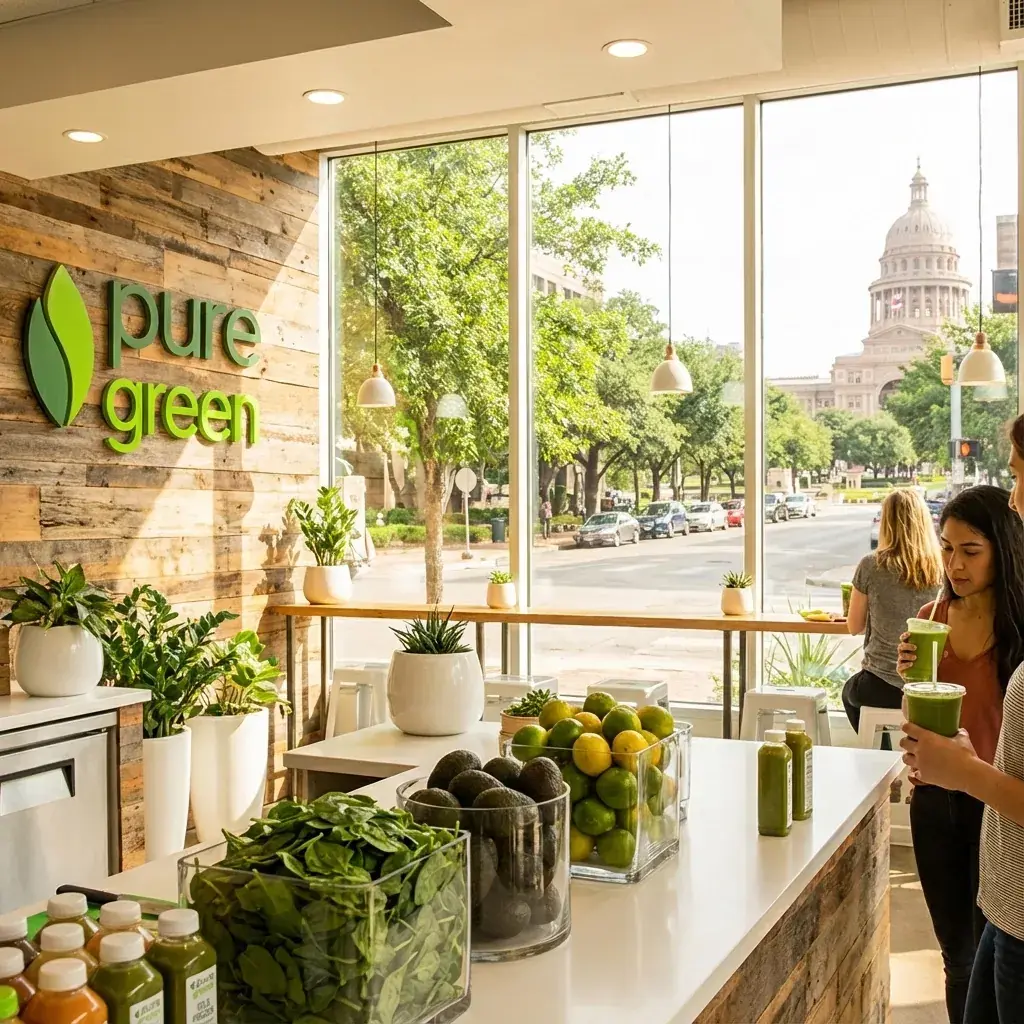
The Pure Green menu includes made-to-order smoothies, acai and pitaya bowls, bottled cold-pressed juices and shots, and other food options. The recommended footprint is 500–1,500 sq ft. For details on individual parts of the model, explore the acai bowl franchise and beverage franchise opportunity.
Store owners manage teams, ingredient and product inventory, preparation standards, food safety, service, and local relationships. Bottled juice and shots are supplied through the wholesale program rather than manufactured and bottled at the franchise location. Site-specific equipment and layout still need review with the development team.
Evaluate training and support before making a shortlist
Pure Green provides site-selection, opening, training, and ongoing support. When comparing franchisors, ask which assistance is included, which services carry additional costs, and what you need to arrange independently.
Discuss the initial training schedule, manager training, approved suppliers, ordering procedures, marketing resources, and how operations questions are handled after launch. A useful comparison makes the owner responsibilities as clear as the support offered.
Assess your market and operating budget
Visit stores and evaluate the experience from ordering through pickup. For your preferred site, review customer access, visibility, nearby homes and employers, competing concepts, storage, and occupancy costs.
Build a budget around the proposed location. Labor, rent, product costs, waste, royalties, marketing, utilities, and debt payments affect operating results. Sales are revenue before expenses; neither an industry trend nor a store’s sales figure establishes what you will take home.
Read Brad Weiss’s Cape Coral owner story and Charles McClendon III’s Arcadia story to prepare questions about opening and support. Individual experiences do not predict another store’s results.
Opening a new franchise versus buying a food franchise for sale
Opening a new location involves a development process, site selection, build-out, and launch. Buying an existing franchise is a resale transaction involving a specific operating business, its financial history, lease, equipment, and any required transfer approval.
If you are searching for a food franchise for sale, clarify which route you want. This page describes franchise opportunities and does not list operating businesses available for resale. For acquisition research, read how to evaluate an existing franchise for sale. Discuss any actual resale availability directly with the development team.
Questions to ask before choosing a food franchise
- What is the total initial investment for the specific format and site?
- How much working capital does the estimate include?
- What preparation, staffing, and management work will I perform?
- Which royalties, advertising, technology, and other recurring fees apply?
- What do franchisees say about opening and ongoing support?
- Is the proposed market available, and what site criteria must I meet?
Discuss the Pure Green opportunity
Explore the franchise overview, cost comparison, or healthy food opening checklist. If the model fits your goals, share your market and qualifications with our team.